Showing posts with label Chalkhill Estate. Show all posts

Thursday, 11 December 2025

Chalkhill infill plans passed unanimously by Brent Planning Committee

 Cllr Kathleen Fraser (Independent, Chalkhill ward) speaks to the Planning Committee


There were some carefully considered contributions to Brent Planning Committee last night when a Metropolitan Housing Trust application for 61 new homes on the Chalkhill Estate was discussed. New blocks of up to 5 storeys will replace garages and car parking space on the 'Science Blocks' area.

Contributors recognised the need for more social housing and were pleased that ALL the new homes will be at social rent. A rare occurence in Brent!

However, there were some downsides. Mariana, from the most affected block, Einstein House, made a detailed case that a three storey block, replacing one storey garages, would impact on the amount of daylight residents received and were too close, well causing Einstein flats to be overlooked from the balconies of the new block.  Various mitigation measures were discussd, including screening of windows, tree planting etc. None of the proposals seemed to fully answer the problem.

 Cllr Kathleen Fraser, (Independent Chalkhill ward) whilst advocating the case for more social housing, recognised the disruption that would occur to residents and listed their concerns in full. She wanted assurances that existing residents would be fully involved and consulted as the demolition and new build took place.

There was concern that a CPZ would land hard-pressed low income residents with further charges. 

An issue that emerged during the discussion was a lack of confidence in Metropolitan Thames Valley's management of the estate including  management, maintenance, waste, safety, anti-social behaviour and issues such as abandoned cars dumped in estate car parks.  Metropolitan Housing Trust is separate from the daily managment and were not ble to answer fully. Brent Council will need to be in close touch with residents, councillors and Metropolitan when the work gets underway.

The Planning Committee unanimously approved the application. 


Friday, 5 December 2025

Chalkhill Estate infill at Planning Committee next week. 105 garages and car park replaced by 61 social rent homes


Metropolitan Housing Trust who run the Chalkhill Estate as Metropolitan Housing Thames Valley have submitted an application for the demolition of 105 garages and re-use of other space to build 61 infill homes on the 'science blocks' site on Chalkhill Road.

The estate was designed with a considerable amount of green space and there are many trees, some of which will be removed. Of the 105 garages 71 are currently unused and the application claims only 18 are used for car parking.


The garages are quite close to existing blocks and will be demolished and replaced by housing


Existing garages and car park in blue above


The planners point out that Forty Lane has been designated an 'intensification corridor' that allows for building heights of up to 5 storeys. The site is between Forty Lane and Chalkhill Road but with some buildings between the site and Forty Lane itself.
 
Building heights:
 
Terrace A - 3 storeys
Block B -3 storeys
Block C - 4 storeys
Block D - 5 storeys
Block E -3 storeys
 

There are CGIs of some of the buildings in the application papers:


Block C above


Plenty of trees are shown in the CGIs. There are currently 69 trees on site with 17 covered by Tree Protection orders and 10 will be removed to make way for the building of the new blocks:
 

 51 new trees will be planted to compensate for the loss but this is not sufficient to make up for the reduction in canopy cover provided by the mature trees on site that predate the estate. The developer will contribute £26,292 for mitigating the loss through new planting in the vicinity of the development.
 
£53,804 will be contributed to the carbon off-set fund. 
 
The provision of 61 new homes at social rent is positive. No intermediate product such as shared ownership is planned. As these are not generally considered affordable to local people, this is a plus. There are a number of larger family homes planned.


 B=bedrooms P=Persons
 
 There are 8 objections to the plans on the Brent Planning Portal. Behind the conflict is planners' treatment of the application as one in an urban context designated for'intensification' and residents' enjoyment of a site originally designed with plenty of light and green space. 
 

 Einstein House
 
Residents of Einstein House are particularly affected and have put in an objection. Note that a contributionof £30,000 to a CPZ is now included and a daylight assessment completed (covered in detail for each property in the Officers' Report HERE) that concludes the harm to exising residents is outweighed by the benefits of the new housing.

Einstein House Objection


I am writing to formally object to the above planning application, specifically the proposal to construct Block E directly behind Einstein House. My objection is based on the following planning concerns:

1. Loss of Light (Daylight and Sunlight Impact)

The proposed Block E will significantly reduce the amount of daylight and sunlight received by residents in Einstein House. The block is approximately three times the height of the current garages and will be located in close proximity to habitable rooms, including bedrooms and living rooms.


During consultation, we were informed that a daylight/sunlight report was conducted. However, no such report assessing the impact on existing homes has been included in the planning documents. The only report presented appears to relate to light within the proposed new blocks. This is a critical omission, as the council must be satisfied that BRE guidelines regarding adequate light to habitable rooms are being met. The height and massing of the proposed development will cast significant shadows over Einstein House, especially during winter months, severely affecting the quality of life for residents.

2. Loss of Privacy and Overlooking

Block E will be positioned approximately 12 metres from Einstein House. This is well below the 18-21 metre standard separation distance typically recommended between directly facing windows of habitable rooms. The proposed design includes balconies and windows that will directly face into the bedrooms and living rooms of existing residents. These rooms are considered habitable spaces and therefore deserve protection from unreasonable overlooking. No mitigation measures (e.g. frosted glass, angled balconies, or screening) appear to have been proposed to reduce this impact.

3. Noise Pollution and Anti-Social Behaviour - New Footpath

The plans propose the removal of the current secure gated area at the rear of Einstein House and its replacement with a public footpath. This significantly impacts residents' privacy, safety, and wellbeing.

Opening this area to public access may encourage anti-social behaviour, especially during evenings, and will create ongoing noise and disturbance. The proposed new lighting for the path while necessary for safety will further affect residents in ground floor flats through light pollution and reduced sleep quality. There is also no detail in the application on how this new public space will be managed or maintained to ensure current resident's safety.

4. Parking Pressure

There are already major parking constraints in the area. The proposed development does not include a robust parking strategy. While a small number of designated spaces appear in the plans, there is no clarity on whether new residents will be restricted from using existing street or estate parking.This will almost certainly exacerbate existing pressures, especially as no Controlled Parking Zone (CPZ) or traffic management scheme is proposed. The application also appears to lack a comprehensive Transport Assessment to evaluate local capacity.

5. Poor Site Planning - Disproportionate Impact of Block E

While the wider development includes some open and green space, the positioning of Block E raises serious concerns. Unlike the other proposed blocks, Block E has been placed extremely close to existing homes in Einstein House just 12 metres away and at a height that is significantly taller than the current garages it replaces.

This placement creates an unbalanced development where one group of residents (in Einstein House) bears a disproportionate burden of the scheme's impact, including loss of light, privacy, and increased noise.

The council should require a review of the mass and siting of Block E to reduce its uniquely high impact and ensure a fairer and more sensitive design approach, especially when other blocks in the proposal do not create similar issues.

6. Lack of Transparent Consultation

Residents were not meaningfully consulted on key elements of the proposal. Several important documents such as the daylight/sunlight assessment for existing residents and detailed traffic or security plans were not shared during the consultation period.
This raises serious concerns about the transparency and fairness of the process, especially considering the significant impact this proposal will have on existing residents' lives.

7. Impact on Mental Wellbeing and Quality of Life

The combined effect of reduced daylight, increased noise, loss of privacy, and general overdevelopment will severely affect the mental wellbeing and quality of life of residents in Einstein House. These concerns should be taken seriously in line with Brent Council's Local Plan objectives and commitment to high-quality, healthy living environments.

Objections raised here fall in line with Brent's Local plan policies, London Plan policy and BRE daylight and sunlight guidelines.

For the reasons set out above, I respectfully urge Brent Council to refuse this application in its current form, or at the very least, require significant redesign and another consultation to mitigate its serious impacts on existing residents.

Einstein House Residents


The Planning Committee takes place at 6pm on Wednesday December 10th in the Conference Hall of Brent Civic Centre or can be observed online HERE.


Chalkhill Estate Centre (Google Earth)
 
When visiting the site I heard fears expressed that further infill proposals from Metropolitan will be made on the estate if this application is successful. Nearby on King's Drive the freeholder is consulting on infill plans for Kings Court (Kings Estate Improvement Programme) and Carmel Court and there are longer term plans for redevelopment to high rise of the ASDA, Kwik Fit, Torch corner site.


Saturday, 22 June 2024

WINDRUSH DAY – The stories of some West Indians in Wembley

 Guest post by local historian Philip Grant to mark Windrush Day. Written in a personal capacity


1.West Indian immigrant workers search a newspaper for jobs on arrival in 1948. (Image from the internet)


Today, 22 June, is Windrush Day, the anniversary of the arrival of the “Empire Windrush” at Tilbury Docks in 1948. The ship brought hundreds of men from the Caribbean, looking for jobs, after the British Nationality Act of 1948 allowed citizens of Commonwealth countries to settle in the UK, to help rebuild the country after the Second World War. 


There had been people from the West Indies in Wembley twenty-four years earlier, representing their island nations at the British Empire Exhibition. This is one of the photographs, taken at the time by a Harlesden photographer, which I will be using in a talk I hope to give in October this year at Harlesden Library, as part of the “Becoming Brent” project for the BEE’s centenary:


2.Representatives of Trinidad and Tobago in their section of the West Indies Pavilion, 1924.
(Source: Brent Archives – Wembley History Society Collection)


I don’t know whether any of the original Windrush passengers came to live in Wembley, but there were certainly other West Indians here that year. Just over three weeks before the “Empire Windrush” docked, the entire West Indies test cricket team came to Vale Farm, at the invitation of Wembley Cricket Club, to play in a benefit match for Learie Constantine (after whom a cultural centre in Willesden is now named). You can read about the match in an article that I will ask Martin to attach below.


3.Learie Constantine, at the height of his cricketing popularity. (Image from the internet)


Learie Constantine was a remarkable man, braving colour prejudice in the late 1920s and 1930s to become the club professional for the Lancashire Cricket League side, Nelson, where he became very popular. During the Second World War he worked for the Ministry of Labour, looking after the welfare of West Indian men who had come to Britain to work in wartime factories. He went on to become a lawyer, fighting racial discrimination, and played an important part in bringing about Britain’s 1965 Race Relations Act.


In July and August 1948, Wembley County School in Stanley Avenue played host to the mens’ Olympic Games teams from seven Commonwealth countries, including Bermuda, British Guiana (now Guyana), Jamaica and Trinidad. The school also arranged accommodation, with the families of pupils, for the female members of two teams. Three Jamaican women athletes stayed with the Welson family, shared coconuts and pineapples with them (a rare treat in food-rationed Britain) and cooked them a meal of boiled rice with grated coconut and red beans.


4.The Jamaican Olympics team at Wembley County School, July 1948. (Courtesy of the Old Alpertonians)


Most of the Jamaican team, paid for by public subscription to represent their island at the Olympic Games for the first time, had spent twenty-four days on a banana boat to reach England. Their captain, Arthur Wint, was already in London, as he had just finished his first year as a medical student at Barts Hospital. He would win Jamaica’s first Olympic gold medal, but he already had wartime medals. Along with his brothers, Lloyd and Douglas, he had volunteered to join the RAF in Jamaica, been sent to train in Canada, and finished the war as a Spitfire pilot (one of around 500 World War Two “Pilots of the Caribbean”!). Arthur Wint was another remarkable West Indian to have graced Wembley in 1948, the “Windrush” year. You can read my article about his life here.


But it wasn’t all sunshine for people of the Windrush generation who came from the Caribbean to work in Britain. The work available was mainly in public services, like London Transport, the Post Office or nursing. Several people I collected memories from for a Kingsbury local history project in 2009, had come to this country from the West Indies in the 1950s and 1960s.  One told me of the hostility that many English people showed them when they arrived, just because of the colour of their skin. Many landlords would not accept coloured tenants, and even going to church was not pleasant, as they were made to feel unwelcome at first.


Another incident recounted to me was about one of the first West Indian families to rent a flat in an old Stonebridge tenement row called Shakespeare Avenue. A live snake was put through their letterbox! Luckily neighbours called a local Englishman, nicknamed “Noah”, who was good with animals. He recognised it was non-poisonous, and soon picked it up and took it away.


5.Christmas Day in the Children’s Ward, Wembley Hospital (Chaplin Road), 1950s.
(From a nurses recruitment brochure in the Wembley History Society Collection at Brent Archives)


One job where accommodation for West Indians was not a problem was as a nurse, or nursing student, at Wembley Hospital. The hospital’s matron welcomed a number of young women from the West Indies in the 1950s, for a two-year training course to become a nurse. You would be paid a £300 a year training allowance, out of which £128 a year was deducted to cover the cost of your board and lodging in the Nurses’ Home. Once you qualified as a State Enrolled Nurse, your annual salary would be £452. I have used the photograph above, of one of these nurses, several times, but I have never discovered the name of the nurse. If you recognise her, please let me know her name in a comment below!


Barbara came to London from Barbados in 1964, to work as a nurse. By 1970, she and her husband lived in a privately-rented one bedroom flat in Harlesden, costing £3 10s a week. Brent Council had built its Chalkhill Estate, but was finding it hard to let hundreds of homes there, because the rent was so much higher than the “controlled rent” (as low as £1 a week) families in run-down properties were paying. That is when Barbara and her husband, and other hard-working West Indian families, got the chance to become Chalkhill tenants. They had to show their passports, provide references to prove that they were of good character and that they had sufficient income to pay the rent (which was £10 10s for their new two-bedroom flat).


6.The Chalkhill Estate with Brent Town Hall beyond, 1980s. (Internet image, courtesy of Winston Vaughan)


Brent Town Hall is a Wembley connection of the last West Indian in my article. Dorman Long was born in St Lucia, and as a young man was a teacher there, before he came to London in 1960. As his teaching qualifications were not recognised, his first job here was as a postman, later going on to work for a housing association, then as a race relations adviser. He soon became involved in local politics, and was a Brent Labour councillor for 33 years. 


7.Dorman Long (right) greeting Nelson Mandela at Wembley Stadium, April 1990.
(Source: Brent Archives – “Wembley Observer” newspaper cutting)


Cllr. Dorman Long was Leader of Brent Council from 1987 to 1990, following a turbulent period when the borough was frequently labelled in the press a “Barmy Brent”. One of his finest hours was welcoming the recently-freed Nelson Mandela to Wembley, and trying to make him a Freeman of Brent. I did not know him personally, but I have read that Dorman Long was a kind person, and a man of principle – excellent qualities for a leader.


Windrush Day was established to honour the contribution that migrants, particularly those from the West Indies, have made to this country. I hope this article has shown, through just a few examples of both ordinary and extraordinary people, how much our community has benefitted from the diversity and experience they have brought and shared with us.


Philip Grant.


Sunday, 3 March 2024

UPDATE: Is the proposal to build 60 social rent infill homes on garage sites on Chalkhill Estate what it seems?


Is a Cabinet Report LINK about delivering 60 homes for Social Rent at Chalkhill what it seems?

Item 11 on the agenda for the Cabinet Meeting on 11 March is headed: ‘Proposal to deliver 60 homes for Social Rent on the Chalk Hill (sic) Estate.’ That’s great news, surely? But you have to read the Report to find out what it really means.

Social Rent is the most affordable of the “genuinely affordable” rent levels. It is the rent level at which the 2020 Brent Poverty Commission Report recommended the Council should build as many homes as possible, because most local people in housing need could not afford anything more expensive. And the Council has, so far, failed to build new homes for this rent level, unless they are existing tenants being moved from homes to be demolished.

But, hang on, does Brent own the Chalkhill Estate? Well, no. In the Report’s “Background” information section, it confirms that Brent Council transferred it to Metropolitan Housing Trust in 1996.

[It also claims that ‘Chalkhill was one of the major estates constructed in the borough by the Greater London Council in the 1960’s.’ Either current Council staff don’t know their local history, or they are trying to rewrite history, to distance themselves from the problems that led to the late 1960s “Bison” blocks being demolished only 30 years after they were built!]

In fact, it is now owned by Metropolitan Thames Valley Housing Association (“MTVH”), and it is their scheme which the Cabinet Report is considering. Cllr. Promise Knight’s “Cabinet Member Foreword” still maintains that: ‘we committed to deliver 5,000 affordable homes in the borough and are on track to achieve this.’

Her Foreword goes on to say: ‘This report sets out an opportunity to work closely with one of our strategic partners MTVH Housing to unlock 60 new social homes for residents by repurposing garage sites.’ [Note that these are now ‘social homes’, no longer ‘homes for Social Rent.’]

So, it is another infill scheme (something which Brent has not been particularly successful with so far - see my October 2023 guest post: Council housing – Does Brent know what it is doing?). But this time it is a Housing Association infill scheme, so why is Brent Council involved?

The part of the Chalkhill Estate involved in this scheme is the low-rise brick-built “Scientists” area at the eastern side of the 1960s estate. The land that MTVH want to build on ‘is subject to several outstanding third-party interests’.

It is Brent Council which has the statutory powers to over-ride these “third-party interests”, using compulsory purchase orders and stopping-up orders. As the Report puts it: ‘the scheme will be delivered by MTVH but the Council’s support will be necessary to enable delivery.’

If the proposed infill scheme does go ahead, it may produce ‘around sixty’ new homes. Although these will not be Brent Council homes, the Report does say ‘it is proposed all new homes delivered as part of the regeneration proposal on the Chalkhill Estate will comprise social housing, and the Council will hold nomination rights.’ Possibly some good news for the future.


UPDATE:

 This, from the Council's website, is what was decided at Cabinet on March 11th:

'Cabinet RESOLVED:

(1) To approve in principle the Council working with Metropolitan Thames Valley Housing Association (MTVH) to support the development objective of delivering new social housing within the Chalkhill Estate.

(2) To approve in principle to make Compulsory Purchase Orders of land interests within the Chalkhill Estate as identified on Plan 1 under Planning or Housing legislation to bring forward the development objectives, subject to a further specific resolution of Cabinet in respect of the making of each order.

(3) To agree advancing the preliminary stages of the compulsory purchase process on the Chalkhill Estate, including, but not limited to, land referencing, issuing section 16 of the Local Government (Miscellaneous Provisions) Act 1976 notices (section 16 notices), engaging, consulting and negotiating with landowners, and preparation of documentation and undertake all matters that the Council might need to undertake to inform a further report to Cabinet to make, confirm and implement the CPO, if required.

(4) To approve in principle to appropriate, subject to planning,the land identified on Plan 1 under section 203 of the 2016 Housing and Planning Act, subject to a further specific resolution of Cabinet in respect of the making of each appropriation.

(5) To approve in principle to make stopping up orders using planning or highways legislation for any land identified on Plan 1 and comprising public highway.

(6) To note the potential for the delivery of new social housing illustrated by MTVH’s current design proposals and that the current proposal will be subject to further consultation, design refinement and following that be subject of an application for planning permission to the Local Planning Authority.

(7) To delegate authority to the Corporate Director of Resident Services, in consultation with the Cabinet Member for Housing, Homelessness and Renters Security to enter into an indemnity agreement with MTVH to indemnify the Council for all costs associated with the compulsory purchase process on Chalkhill Estate.'


Tuesday, 20 December 2022

Wembley History Society Christmas Picture Quiz - the answers!

 Guest post by local historian Philip Grant


Thank you to everyone who had a go at last weekend’s Wembley History Society Christmas Picture Quiz, 2022. It was a chance to take a short break from a number of more serious issues covered by “Wembley Matters”, and I hope you enjoyed it. 


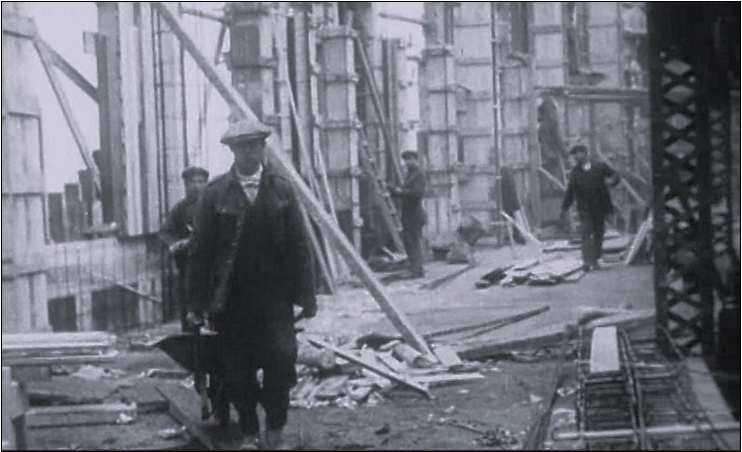
I included a clue, ‘in 1923’, in question 2, so hopefully at least those of you who remember the original Wembley Stadium (demolished twenty years ago) will have spotted that the men in the photograph were building one of Wembley’s “twin towers”. 


Workers building the concrete walls of the Stadium, winter 1922/23. (Screenshot from an old film)


Next year will mark the centenary of the building which made the name of our district famous around the world. We will celebrate that in 2023, but I wanted to take this opportunity to pay tribute to the workers who built this reinforced concrete landmark in just 300 days (without the benefit of modern machinery, or hard hats!).


Were there a few of the pictures that you didn’t know the answers to? If that’s the case, you have the chance over the Christmas / New Year break to discover more about Wembley’s past. I’ve included “links” with most of the answers, which will take you to illustrated articles giving more information, if you want to take advantage of them.

If you were feeling competitive, you can now see how many of the questions you got the right answers to. There are no prizes, but if you want to publish your score out of ten (just to let others know how well, or badly, you did), you are welcome to add a comment below – only honest claims, please!


Philip Grant,
for Wembley History Society.


Monday, 26 April 2021

Metropolitan Housing to make changes in shared ownership conditions

 From Inside Housing

Metropolitan Thames Valley Housing (MTVH), which owns and manages around 57,000 homes including much of the Chalkhill Estate in Wembley, has committed to offering all new shared owners 990-year leases following a policy review.

Existing shared owners, of which MTVH has around 8,700 through its SO Resi brand, will be offered the chance to extend their lease to 990 years from June 2021 for a cost based on the size of their equity share.

The changes will only apply to schemes where MTVH is the freeholder.

It will also scrap ground rents for all new sales on schemes where MTVH is the freeholder, effective immediately.

Marriage value – the property value increase following the lease extension – will no longer be considered when calculating extension costs.

From April 2022, all 6,500 MTVH leaseholders will see ground rents phased out on properties where the association is the freeholder, as well as being given the option to buy a 990-year lease extension without marriage value costs.

MTVH said the changes are intended to improve security and cut costs for its shared owner

Saturday, 23 May 2015

Jobs for Chalkhill and Metropolitan Housing residents


Chalkhill Jobs is run by Olmec's Solid Foundations project in Brent and funded by Well London and Metropolitan Housing. Our aim is to find sustainable employment for Metropolitan Housing residents living in North West London and for residents of the Chalkhill Estate in Wembley Park.

We provide employment support via appointment and through the Job Seeking Support Service which runs from the Chalkhill Community Centre (near Asda) computer room during the following times:
Mon: 10 – 12
Thu: 10 – 12
If you are a Chalkhill or Metropolitan resident drop in for expert assistance with CV Writing, interview advice, application forms, and job search, or simply to ask for the most up to date list of jobs we're currently recruiting for.
The computer room is also open on a Tuesday between 10am and 4pm for residents to use the facilities for job, education, or house swap purposes.
If you would like us to consider your CV for our live vacancies or want to make an appointment for specific advice please email katie.gerrard@olmec-ec.org.uk

LINK to current vacancies

Friday, 22 August 2014

Help tidy up Chalkhill Park on Sunday

Chalkhill Park yesterday
Chalkhill Park is little more than a year old and has already won a place in the hearts of local residents. It is very well used, particularly on warm sunny days, and this inevitably means some littering.

On Sunday Thames21 have organised a clean up on Sunday (details below) and I hope to be there with others who recognise the huge part the park has played in improving the quality of life on the estate.

This afternoon children from the Summer Playscheme will be performing in the park.


Tuesday, 1 July 2014

Become a 'Healthy Space Champion' on Chalkhill

The wildflower meadow at Chalkhill Park

From Well London Chalkhill

As part of the Chalkhill Well London we have some exciting new training to offer you…

If you want to make a change in your local area by learning how to champion food growing, wildlife and biodiversity then come along to FREE training to become a Healthy Space Champion!

Training is open Open to the Well London team and all Chalkhill residents.

You’ll learn about the benefits green space can have on health and well-being and can champion this in Chalkhill. This learning will be done through discussions, group work and practical workshops led by a Community Gardener.

Training takes place in Chalkhill on Thurs 7th Aug, Thurs 14th Aug, Thurs 21st Aug, Thurs 4th Sep. From 6.30 to 9pm.

You will also have the opportunity to create ‘Active Living Maps’ of Chalkhill and use these to inform others where the best places are to improve health and wellbeing. The training includes an ‘inspirational visit’ to a community green space to see urban food growing and / or biodiversity and wildlife in practice.

If you think you can champion green space in your area and support other residents to improve their local environment then please contact Michael Stuart on 07568 575580 or m.stuart@cvsbrent.org.uk  to apply for your place.