
WEMBLEY MATTERS News and views on local politics, the environment, climate change, culture and local history
Saturday, 1 December 2012
Natalie Bennett's speech at Climate Change Rally

Friday, 30 November 2012
Join the Brent contingent on Climate March today
As often happens at the weekend I am torn about which of the several events happening Saturday I should attend. The Counihan Family March takes place in Kilburn High Road at 1pm, the Chalkhill Community Festival from 1-4pm and a crucial conference on the future of primary education is being held in Lambeth. All these events are important and worth supporting.
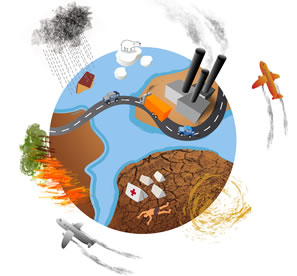
The Campaign Against Climate Change March in taking place in Central London. The threat posed by climate change is huge, so huge that it is almost impossible to comprehend its impact, and therefore so tempting to turn to something more manageable. It is almost like knowing we our all going to die eventually - too difficult to really take in so we ignore the inevitable and carry on living day to day because worrying about it will do no good.
Well, I believe we can do something, although the window of opportunity is shrinking rapidly. We have to shout from the rooftops about the issues and demand action from governments across the world. Tomorrow's march is a tiny part of that campaign.
Reasons to march tomorrow:
- The rapid melting of the Arctic ice cap.
- Floods and droughts driving up food prices and world hunger.
- Hurricane Sandy the most powerful Atlantic tropical storm since records began.
- Over 200 Flood Warnings and one Severe Flood Warning in Britain recently.
- Climate change will worsen the economic crisis as food prices soar and land is used to grow fuel instead of food
- Food and water shortages will cause armed conflict between countries
- Mass migrations will take place from affected areas with homes and livelihoods lost.
- The greed for fossil fuels will see oil companies turning to more and more dangerous extraction methods that damage the environment.
NATIONAL CLIMATE MARCH DECEMBER 1st12.00 -1.30 Assemble Grosvenor Square and build the "Grosvenor Square Keystone pipeline" from the Canadian High Commission to the US embassy !
Assemble 12.00 noon in Grosvenor Square
or
Join the Brent contingent at the entrance to Willesden Green tube at 11.15am
1.30 - 3.30 March to Parliament
3.30 - 4.30 Build a giant mock fracking rig outside parliament !
Come to the Chalklhill Community Festival on Saturday
This Saturday 1st December there is a Community Festival from 1-4pm at Chalkhill Community Centre with 35 stalls and activities
offering the chance to try out and meet many of the groups and
activities in Chalkhill including:
- Team GB Olympic fencer James Honeybone
- Magician
- Jewellery making
- Pilates
- Singing
- Free hot lunch from 1-2pm, choice of Caribbean, Asian, British and African with halal and vegetarian options
- fire engine
- football skills
- taekwondo
- pampering
The event is completely free and for all ages.
113 Chalkhill Road, Wembley, Middlesex HA9 9FX
113 Chalkhill Road, Wembley, Middlesex HA9 9FX
Thursday, 29 November 2012
"A farrago, a sham, an utterly dishonest exercise"
It reminded me of those Victorian pictures of the ragged, scrawny child, barefoot in the snow, with nose pressed against a restaurant window staring at the big-bellied rich tucking into their suppers in a warm glow of complacency.
We were in the opulent surroundings of a ballroom in the Hilton Metropole, Edgware Road trying to tell the smooth, expensively suited gentlemen from NW London NHS on the platform just what untold damage their 'Shaping A Healthier Future' (SAHF) proposals would do the people of Harlesden and Stonebridge, two of London's poorest wards. The whole consultation exercise to reach a foregone conclusion has cost £7,000,000
We were presented with a IPSO/MORI consultation report that ignored the thousands who had signed petitions against the proposals but instead went on to suggest that that the far fewer people who had submitted a response to Options A, B or C (all rejected by the petitioners) somehow represented some kind of democratic endorsement. 66,000 signatories on 18 petitions were apparently counted as 18 responses.
Andy Slaughter MP summed it up:
Ann Drinkell, put her finger on the dangers towards the end of the Q and A session. She claimed that SAHF had been dishonest about the ability of community care being suddenly able to pick up on the slack when fewer people were admitted to hospital or stayed for a shorter period.
After a buffet supper (those ragamuffins in my head again) we went into 'Stakeholder Workshops'. These were introduced by Lucy Ivimy, Chair of the Joint Health Overview and Scrutiny Committee, a Conservative councillor in Hammersmith and Fulham.
She said that the initial impetus for the proposals had been the rationalisation of Accident and Emergency wards in the area and the fall out was a consequence of this, The virtual closure of two hospitals had been hidden deep in the plans, Given the wide geographical area and the propensity of people wanting to protect their own local facilities it had not been possible for the Committee to reach agreement.
She said that there were two main concerns:
1. SAHF was premised on success of the out of hospital strategy. This had been promoted for years but in real life admissions had continued to rise. We need more evidence on the strategy and a firm path to follow.
2. Transport was a big issue. Although there was a claim from the ambulance survey that there was little impact on the 'blue light' journeys the majority of journeys to hospital are by other means including public transport. There had been no analysis of these journeys.
A skirmish followed about whether this represented the committee and it emerged that an initial very critical report had been replaced by a much sifter version which was the 'official report'.
The workshops that followed were actually very interesting and dealt with issues that should have been discussed prior to the formulation of the plans. The public were feeding back on their real lived experiences - not going through a desk-top exercise. The world turned upside down.
In the workshop I attended I protested once again that schools as stakeholder had not been consulted at all and that children had been left out at a time when the child population is rising and they will be making demands on the health service. Gurjinder Sandhu, a specialist in infectious diseases, working at Ealing Hospital backed this up describing the importance being able to access hospitals and their presence aiding recovery, how A&E picked up child protection issues and that the difficulty schools would have in trying to deal with fragmenting services. A&E had a role in detecting TB which was very high in Southall and Ealing - not to mention HIV.
In the workshop on Urgent Care Centre a disagreement became apparent between practitioners about how reliable UCCs were with a suggestion that staffing levels and expertise were poor and that this represented a risk to patients. This was even more so when there was no A&E on the same site as will be the case with Central Middlesex Hospital.
The strong underlying thread was that health services and access to health services would worsen for the most vulnerable. The ragamuffin has been left out in the cold.
Consultation feedback below:
We were in the opulent surroundings of a ballroom in the Hilton Metropole, Edgware Road trying to tell the smooth, expensively suited gentlemen from NW London NHS on the platform just what untold damage their 'Shaping A Healthier Future' (SAHF) proposals would do the people of Harlesden and Stonebridge, two of London's poorest wards. The whole consultation exercise to reach a foregone conclusion has cost £7,000,000
We were presented with a IPSO/MORI consultation report that ignored the thousands who had signed petitions against the proposals but instead went on to suggest that that the far fewer people who had submitted a response to Options A, B or C (all rejected by the petitioners) somehow represented some kind of democratic endorsement. 66,000 signatories on 18 petitions were apparently counted as 18 responses.
Andy Slaughter MP summed it up:
This is a complete farrago, a complete sham, a completely and utterly dishonest exercise!This was the beginning of many exchanges about the consultation which I felt rather let IPSO/MORI take the fire that should have been aimed at NW London NHS for the inadequacy and downright dangerousness and dishonesty of their proposals.
Ann Drinkell, put her finger on the dangers towards the end of the Q and A session. She claimed that SAHF had been dishonest about the ability of community care being suddenly able to pick up on the slack when fewer people were admitted to hospital or stayed for a shorter period.
Everyone know we aspire to good community care, good palliative care, but everyone also knows how difficult it is. It is disingenuous to suddenly think it will be unproblematic. The impact of restructuring and budget cuts on community care and social care will be enormous. You are treating us like children.Dr Mark Spencer then proceeded to do just that, treating us to a couple of anodyne PowerPoint slides on the 'Programme of Work' and 'Clinical Review of Responses' that would now begin. We were not allowed to ask questi9ons about this.
After a buffet supper (those ragamuffins in my head again) we went into 'Stakeholder Workshops'. These were introduced by Lucy Ivimy, Chair of the Joint Health Overview and Scrutiny Committee, a Conservative councillor in Hammersmith and Fulham.
She said that the initial impetus for the proposals had been the rationalisation of Accident and Emergency wards in the area and the fall out was a consequence of this, The virtual closure of two hospitals had been hidden deep in the plans, Given the wide geographical area and the propensity of people wanting to protect their own local facilities it had not been possible for the Committee to reach agreement.
She said that there were two main concerns:
1. SAHF was premised on success of the out of hospital strategy. This had been promoted for years but in real life admissions had continued to rise. We need more evidence on the strategy and a firm path to follow.
2. Transport was a big issue. Although there was a claim from the ambulance survey that there was little impact on the 'blue light' journeys the majority of journeys to hospital are by other means including public transport. There had been no analysis of these journeys.
A skirmish followed about whether this represented the committee and it emerged that an initial very critical report had been replaced by a much sifter version which was the 'official report'.
The workshops that followed were actually very interesting and dealt with issues that should have been discussed prior to the formulation of the plans. The public were feeding back on their real lived experiences - not going through a desk-top exercise. The world turned upside down.
In the workshop I attended I protested once again that schools as stakeholder had not been consulted at all and that children had been left out at a time when the child population is rising and they will be making demands on the health service. Gurjinder Sandhu, a specialist in infectious diseases, working at Ealing Hospital backed this up describing the importance being able to access hospitals and their presence aiding recovery, how A&E picked up child protection issues and that the difficulty schools would have in trying to deal with fragmenting services. A&E had a role in detecting TB which was very high in Southall and Ealing - not to mention HIV.
In the workshop on Urgent Care Centre a disagreement became apparent between practitioners about how reliable UCCs were with a suggestion that staffing levels and expertise were poor and that this represented a risk to patients. This was even more so when there was no A&E on the same site as will be the case with Central Middlesex Hospital.
The strong underlying thread was that health services and access to health services would worsen for the most vulnerable. The ragamuffin has been left out in the cold.
Consultation feedback below:
Subscribe to:
Comments (Atom)