Showing posts with label Labour Hub. Show all posts

Friday, 3 April 2026

Socialist Health Association: Why We Stand With Resident Doctors

 Reprinted with the permission of the author and Labour Hub. Original article HERE.


This dispute is about patient safety, not just pay, argues Dr Rathi Guhadasan, writing on behalf of the Socialist Health Association.

The headlines tell one version of this story: disruption, cancelled appointments, patients stuck in the middle. It’s understandable that the government’s position resonates with many people. But headlines don’t tell the whole story.

If we’re serious about what’s good for patients in the long run, we can’t stay silent. We support the BMA’s resident doctors in their dispute with the government — and here’s why.

Fifteen Years of a Shrinking Pay Packet

This dispute didn’t start in 2025. The roots go back to 2008, when pay policy began quietly — but steadily — chipping away at what resident doctors actually earn in real terms.

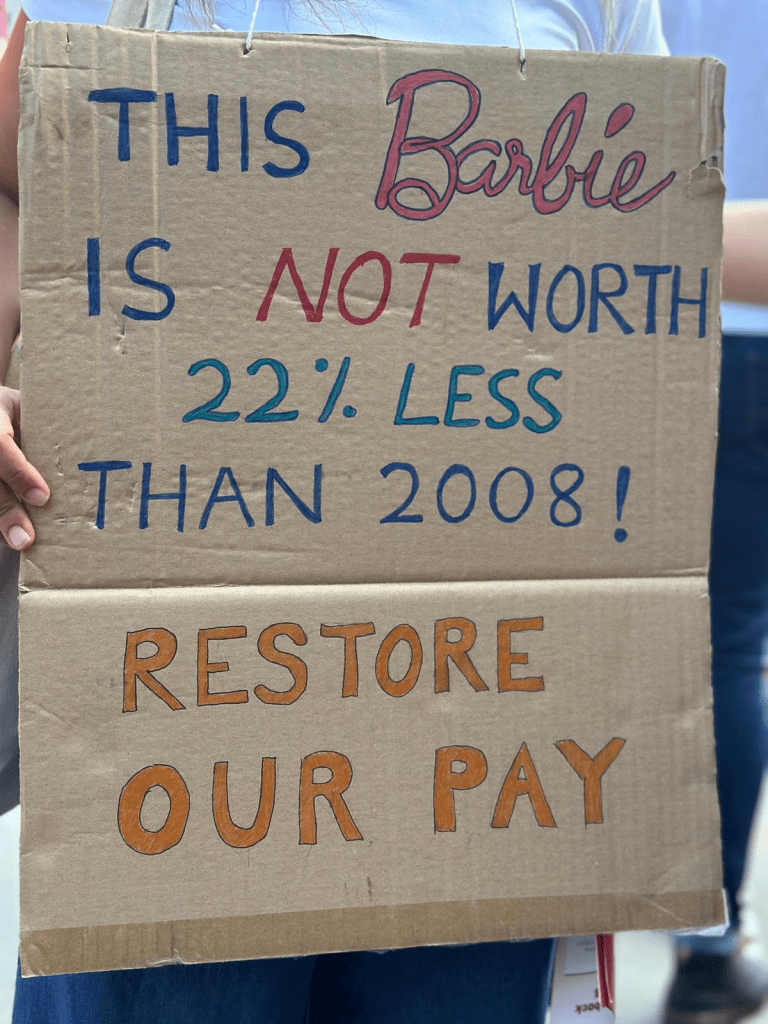
Measured against the Retail Price Index — which includes housing costs and student loan interest, two of the biggest financial pressures on junior doctors — pay has fallen by roughly 22% in real value since 2008/09. Even Full Fact, the independent fact-checking organisation that questioned the BMA’s preferred measure, still agrees that pay has fallen in real terms. 

Whichever way you count it, doctors’ spending power has been steadily eroded over more than a decade.

The low point came in 2022/23, when the BMA estimated the real-terms loss had reached around 29%. Strike action in 2023 forced movement. The deal struck with the newly elected Labour government in September 2024 included a combined pay uplift of 22.3% across 2023/24 and 2024/25 — though it’s worth noting that part of this had already been awarded under the previous Conservative government.

Despite those rises, resident doctors’ pay in England remained around 20.8% below where it was in 2008. The 2024 deal was progress — but it wasn’t the finish line.

Then came Labour’s offer for 2025/26: a 5.4% rise recommended by the independent pay review body. The BMA argues this still represents a real-terms pay cut when set against actual inflation. Their position is that a 26% uplift on 2024/25 basic rates is needed to fully restore pay.


This pay gap wasn’t created by doctors. It was created by successive governments — Conservative and Labour — repeatedly choosing to let doctors’ pay fall behind the cost of living. Asking doctors to simply accept that as permanent isn’t fairness. It’s making them foot the bill for political decisions they had no part in.

The Career Bottleneck: Too Many Doctors, Too Few Opportunities

Pay is only part of what’s at stake here. There’s a second issue — one with even deeper implications for the care patients receive.

After their initial training, junior doctors must compete for specialty training posts — the pathway to becoming a consultant, a GP, or a surgeon. In 2019, there were roughly 1.4 applicants for every available training post. By 2025, that ratio had surged to more than 5 to 1. In some specialties, the figures are startling. Over 10,000 doctors applied for psychiatry training posts in 2025 — fewer than 500 places were available, amidst a national crisis in mental health care. Five doctors applied for every GP training post, at a time when millions of patients across England are struggling to get a GP appointment at all.

How did this happen? The previous Conservative government expanded medical school places without creating a matching expansion in specialty training posts. At the same time, overseas recruitment was increased — without addressing the underlying shortage of training posts. The predictable result: thousands of doctors unable to move forward in their careers, or unable to find posts at all.

This isn’t just a career problem for individual doctors. It has direct consequences for patients. The Lancet has warned that the consultant bottleneck alone could leave up to 11,000 posts unfilled by 2048. The NHS is training doctors it cannot then absorb into the senior roles they were trained for — while using less-qualified staff to plug the gaps those doctors could fill, if only the training posts existed.

The government’s response was to pass the Medical Training (Prioritisation) Act in early 2026, giving UK medics priority in competing for these posts. But overseas-trained doctors have been a vital lifeline for the NHS, filling critical gaps that the domestic system failed to plug. The answer is not fewer doctors but a dramatic expansion of the training posts needed to develop the service we need, one that is fully resourced and fit for the 21st century.

And legislation about who gets to compete for too few positions doesn’t solve the problem – for doctors or patients. As one surgeon put it in parliamentary debate: “If we increase the number of trainees, we will also need to increase the number of consultants and GPs. If we do not do that, we will simply push the bottleneck down the road.”

The Substitution Problem: Who Is Actually Treating You?

Here’s the part of this crisis that gets the least attention — but as patients, should scare us most of all.

Across the NHS, physician associates (PAs) and anaesthesia associates (AAs) are increasingly being used to fill roles that have traditionally been carried out by doctors.

PAs typically hold a two-year postgraduate qualification. They cannot prescribe medication independently and they cannot make admission or discharge decisions on their own. They are not doctors. Yet in too many NHS trusts, they have been placed in clinical roles that require a doctor’s training, a doctor’s legal accountability, and a doctor’s level of skill — at a lower cost to the employer. The previous government planned for 10,000 PAs in the NHS by 2036/37 and Labour so far has stuck to this plan.

This isn’t a fringe concern. A BMA survey of more than 18,000 doctors found that 87% believed the way PAs currently work poses a risk to patient safety. The case of Emily Chesterton — a 30-year-old woman who died after being misdiagnosed by a PA she believed to be her GP — brought these concerns into sharp public focus.

In response, the Royal College of General Practitioners withdrew its support for PAs in primary care in September 2024. The government commissioned an independent review (the Leng Review), which reported in July 2025, and the GMC began formally regulating PAs and AAs from December 2024. The Socialist Health Association argued two years ago for an immediate recruitment freeze and eventual phase-out of existing roles.

But none of that changes the basic financial logic driving the problem: PAs cost less. In an NHS under constant financial pressure, the incentive to fill a rota gap with a PA rather than a fully trained doctor doesn’t go away just because a policy document says it should. It won’t change until the underlying structural conditions change.

This Is a Patient Safety Issue, Not Just a Pay Row

All of this connects. A doctor who is financially worse off year on year, who can’t see a clear path to the specialty they trained for, who watches less-qualified staff fill roles that should support their own development, and who routinely works hours that exceed safe limits — that doctor is not at their best. And that matters for the patients they treat.

Burnout, moral injury and emigration are not abstract risks. The NHS is already losing trained doctors to Australia, Canada and New Zealand in significant numbers — partly because those systems offer better pay, clearer career prospects, and a greater sense of professional respect.

When we allow the conditions driving that exodus to persist — when we systematically underpay, under-employ, and structurally sideline the doctors we’ve spent public money training — we’re not saving money. We’re deferring the cost onto future patients, future NHS budgets, and future governments left with a consultant workforce too small to meet the needs of an ageing population.

Where Things Stand

The BMA’s resident doctors committee rejected the government’s most recent offer at the end of March 2026. The government says it was a generous deal — pay rises over three years, up to 4,500 additional specialty training posts, and reimbursement of Royal College exam fees. The BMA says the pay trajectory still embeds a real-terms cut, and that 4,500 posts over three years falls far short of addressing a deficit measured in tens of thousands.

A settlement that doesn’t genuinely reverse fifteen years of real-terms pay erosion — and that doesn’t commit meaningfully to expanding specialty training at a scale that matches the problem — isn’t a solution. It’s another chapter in managed decline, dressed up as responsible government.

An Honest Reckoning

Strike action causes real disruption. Patients have appointments cancelled. Procedures are delayed. Those are genuine harms, and they fall on people who are already unwell.

But let’s apply the same honesty to what happens if this dispute isn’t resolved. What is the cost of letting a generation of medical graduates be lost to other countries or to career stagnation? What is the cost of systematically replacing clinical expertise with associate roles that don’t carry equivalent training or legal responsibility? What is the cost of a consultant workforce that, by the 2040s, is too thin to serve an ageing population?

The disruption of a strike is visible and immediate. The harm of getting this wrong is invisible and slow — until it isn’t. When the Prime Minister and the Health Secretary threaten to withdraw training places, it is the patients of the future who are most at risk.

Our Position

We want this dispute resolved — with an agreement that honestly reflects what has happened to medical pay and medical careers over the past fifteen years. That agreement must include a credible commitment to expanding specialty training at a scale that actually matches the pipeline of doctors the NHS has already trained.

Until that agreement exists, we stand with the doctors who are asking for it.

Dr Rathi Guhadasan is Chair of the Socialist Health Association.

Wednesday, 7 January 2026

More Brent Labour resignations over rightwards direction of party and undemocratic local council candidate selection

 From Labour Hub

Last month, five Brent councillors in northwest London resigned from the Labour Party and joined the Greens, after local Labour members were denied the right to select candidates for the May 2026 local elections and a special ‘Campaign Improvement Board’ imposed candidates across all wards in the borough, excluding eight sitting councillors, without right of appeal. Now five members of Brent West CLP, all leading activists including former constituency officers, have also quit the Party. Here we publish their Resignation Statement.

We all joined the Labour Party as a vehicle for promoting social justice, both at home and abroad, fairness, equality, protecting the NHS and ensuring a reasonable minimum standard of living for all.  These are the values that the Party held when we first became members. 

Sadly, we have all decided to leave, as it is clear that under the current leadership these values have been abandoned in favour of protecting the status quo where the rich get richer and the majority get poorer, we  allow developers to build luxury homes which remain largely empty when we desperately need social housing, and the leadership have joined the right wing chorus in demonising immigrants rather than addressing the real causes of poverty, our unequal economy system.

On Gaza, Labour has demonstrated a lack of any decent lawful responses to the genocide and the ongoing humanitarian crisis carried out by Israel. Instead, it has assisted Israel with ethnic cleansing of Gaza and remained silent on the daily attacks on Palestinians on the West Bank. The government has supported the genocide by carrying out regular reconnaissance flights over Gaza from a base in Cyprus and sending the information to the Israelis.

Labour has taken the decision to proscribe Palestine Action and remains silent about the hunger strikers. David Lammy initially denied knowledge and continues to refuse to meet the families and lawyers of the eight hunger strikers, five who have been hospitalised, one for the second time. Their families say they are being given no information about their condition.

They have been over a year in prison pre-trial which is double the legal limit, denied bail and their plight ignored by mainstream media.

David Lammy’s proposals for no-jury trials for under 5-year sentences (for which there is no clear evidence base) will affect activists/protesters and according to over 100 senior legal experts, risks deepening disparities and eroding trust among minority communities.

On asylum seekers, we have seen Shabana Mahmood’s shameful proposals as part of this Labour Government’s general move towards adopting the rhetoric of Reform UK and the far right.

Under Labour, we have seen an increase of privatisation and outsourcing of NHS care to the private sector. The NHS is not properly funded or staffed and undervalues social care. 

With over 100,000 vacancies and a real terms funding deficit of £423 billion, the NHS is in crisis. Plans to increase outsourcing of NHS care to private providers contradict clear       evidence that this is associated with widening inequalities, increasing mortality and excessive costs – funding up to 32% profit margins for these private providers.

On the Employment Rights Bill we have seen Labour abandon its manifesto commitment to give workers rights from day one by bowing to the pro-business amendments tabled by the House of Lords.      

We have seen Labour not only abandon its Green Pledge but also propose an expansion of Heathrow Airport which will be a disaster for the environment.

At the most recent budget, Labour bowed to pressure from business and failed to apply a windfall tax on banks or any meaningful taxes that would redistribute wealth fairly.

In addition, we have witnessed Labour imposing an undemocratic selection process for local councillors in Brent. Despite vigorous opposition from the CLP and warnings about the impact on membership and active branches, London Region on behalf of the Labour Party nationally went ahead and deselected eight sitting councillors.

We are fortunate to have a local MP who continues to use all platforms available to put the case for traditional Labour values, although there are now so few voices opposing Labour’s relentless shift to the right. We will continue to campaign for socialist values but sadly this will now be elsewhere.

Elaine MacDonald (Executive Committee delegate)

Alan Scott (EC delegate)

Keith Perrin (EC delegate)

Gaynor Lloyd (General Meeting delegate)

Tim Miles (GM delegate)

 Reacting to the statement, Amandine Alexandre, Brent Green Party Local Contact Officer and Green candidate for Harlesden and Kensal Green said:

Hearing about the news that 5 members of Brent West CLP had resigned, I first rejoiced at the thought that Brent Labour Party had suffered another major loss. However, after reading their statement and being reminded again about the way Keir Starmer has betrayed Labour Party members and voters, I felt incredibly sad. The ideological direction taken by Starmer's government is having a severe impact on people's lives and future, starting with the hunger strikers, three of whom are from Brent. In the face of the intolerable cruelty and cowardice displayed by the Prime Minister and his supporters, we can only show courage, determination and open the way to a radical and far superior way of doing politics - with people's best interests in mind.

Wednesday, 17 December 2025

Keir Starmer’s self-inflicted ‘nightmare’ - an insight into recent Brent events and the wider context

The remaining Brent Labour councillors are apparently as jitttery as teachers before an Ofsted inspection as they await a second visit  in January from 'Tatler's Troops' (Campaign Improvement Board). Further turmoil is expected with some surprises possible.

An article on Labour Hub, explains the background. Thanks to Labour Hub for permission to reproduce the article. The original article is available here: Labour Hub.  


“Nightmare for Keir Starmer as he’s hit by five Labour defections,” headlined the Daily Express.  Five councillors in the London borough of Brent have defected from Labour to the Greens and Green Party leader Zack Polanski says his party is ready to “bury” Labour at next year’s local elections as he welcomed them.


Another Campaign Improvement Board disaster


Four of the five councillors were barred by Labour from running again in 2026 after the Party instituted a ‘Campaign Improvement Board’ to replace the local Party’s usual democratic selection process. Normally, Labour allows local branches to select its candidates, but this time the Board interviewed the would-be candidates and then either approved or barred them from standing. The process was rubber-stamped by Labour’s National executive Committee, with no right of appeal.


This controversial and undemocratic process has been used elsewhere, most notoriously in Leicester. A Campaign Improvement Board was set up there ahead of the 2023 city council elections, and local Party members were denied the opportunity to select their candidates. Nineteen sitting councillors were barred, including all the Hindu councillors, and a high proportion of BAME councillors. The demoralisation and disgust at these manoeuvres meant the Party lost 22 seats in the subsequent election. In the 2024 general election, Leicester East was the only Tory gain from Labour in the entire country and Leicester South was won by an Independent.


Notwithstanding the damage done, a similar process was imposed on Brent earlier this year. Eight sitting councillors were excluded. All of them had signed a statement calling for a ceasefire in Gaza in October 2023. All eight were from minoritised communities.


The flimsy justifications for the top- down process, such as alleged concerns over the previous selection process in 2022, look absurd, given that all steps in that process were fully coordinated with and signed off by regional Party officials. Instead, the entire exercise smacks of a factional strike against councillors who are out of step with the increasingly right wing politics of the Party’s national leadership.


Statements from those leaving


On Monday, four of the sitting councillors, along with one who was not barred by Labour from re-standing, announced they were leaving the Party to join the Greens. A statement from the group said: “Like thousands of others, we joined the Labour Party because we believed in building a fairer society. As councillors, we took that mission into Brent, determined to stand up for the people who placed their trust in us…


“We have now come to the realisation that we can no longer play that role effectively while remaining within the Labour Party. We always knew being a party of government would put the principles and values of the party to the test, but we have watched as on every issue this government goes further away from the founding Labour Party principles of democracy, social justice and equality…


“We did not enter public life to serve a party machine – we entered it to serve our residents and we will not abandon that duty. That is why we are today resigning our membership of the Labour Party, and joining the Green Party, becoming the first Green Group of Councillors in Brent…


“We invite all who share this vision to work with us in offering Brent a real alternative. Together, we can build a Brent that puts people before profit, public good before private greed and hope before fear.”


 The councillors, including a former council Cabinet member and the Labour group’s former chief whip, accused Keir Starmer of a lack of ambition to deliver change, and criticised the government for “copying far-right policy and rhetoric on migration”, being “complicit” in the war in Gaza and for “silencing internal debate dissent”.


In a personal statement, Iman Ahmadi Moghaddam, who served as the Labour group’s chief whip until his defection, said: “I have given thousands of hours of my life to this party – knocking doors, delivering leaflets, recruiting members, volunteering at conference, facilitating meetings, giving presentations, and taking on countless other roles. I did this because I believed Labour, in government, could deliver meaningful change and move us towards a fairer society rooted in socialist values.


“I stayed even when I disagreed with decisions taken locally or nationally. I stayed while experiencing bullying, racism and Islamophobia that many long-standing members will recognise. I stayed because I believed that, ultimately, Labour’s success would be in the service of the people we exist to represent.


“But it has become impossible to ignore the reality that Labour has already left the principles that brought many of us into public life. Remaining a Labour member no longer feels like a route to change, and increasingly feels actively harmful.


“Under Keir Starmer, Labour has abandoned any serious ambition to transform society. It has embraced austerity during a cost-of-living crisis, sided with big developers and corporate interests, and hollowed out internal democracy so that dissent is punished and conscience is treated as a liability. The party is now dominated by a narrow, self-serving clique more concerned with control and careerism than with delivering real change.


“This is clearest on Gaza. What is taking place is a genocide, with British roots and ongoing British involvement through arms sales and the criminalisation of peaceful protest. Members and elected representatives who have spoken out (from a position of basic human decency) have been bullied, suspended or silenced. I include myself among them.


“At the same time, the leadership has chosen to pander to the far right by scapegoating migrants and stoking division to mask its own economic failures. This is not only a betrayal of Labour’s values; it actively legitimises forces that threaten our communities and our democracy.


“There remain many members, Councillors and MPs in Labour who are principled, well-intentioned and committed to socialist values. Many of you will read this. This statement is not written in anger towards you, but in sadness at what the party has become.”


Councillor Mary Mitchell said: “The Labour Party has left the values that I stand for, and what the Party historically has stood for and achieved. 


“In copying far-right policy and rhetoric on migration, scrapping jury trials and the draconian policing of protest, we have seen the Labour Party move to the right.  


“In downgrading investment in the energy transition and deepening fossil-fuel interests, the party has gone against manifesto promises on tackling climate change and nature depletion.  

“The appalling complicity in Israel’s genocidal actions in Gaza and suspension from the party of those who call this out is a stain on Labour’s historic record of free speech and human rights advocacy.”


Cllr Harbi Farah, former Cabinet Leader for Safer Communities, said: “I am leaving the Labour Party because my values have not changed; the party has. I still believe in a society structured around solidarity and genuine systemic change. I am a socialist, and I seek a political home that unambiguously champions these ideals.”


All the defecting councillors criticised the restrictive internal culture of the Labour Party that had abandoned its former inclusivity and openness.


Consequences


 A London Labour spokesperson responded to the defections, saying: “For the avoidance of doubt, all but one of the individuals unveiled were not selected to stand for the Labour Party at the next election, as they fell below the standards we require of those seeking to represent Labour. The Labour Party operates rigorous and transparent selection processes and maintains the highest standards for its candidates.”


Most local members would disagree. There was no transparent selection process for the 2026 local elections – it was replaced by a secretive, factional operation that carved out a number of excellent councillors, many of whom enjoyed wholehearted support from their local members.


Brent councillor Shama Tatler is widely thought to have had a hand in this undemocratic process, as she did in the Leicester carve-up. She has now been rewarded with a peerage, as one of the 25 Labour nominees to the House of Lords last week. The list was one of the most narrowly factional in many years – it includes Geeta Nargund, the mother of the failed Labour candidate who ran against Jeremy Corbyn in Islington North last year – she runs a private fertility clinic.


One of the ostensible justifications for imposing a Campaign Improvement Board on Brent Labour Party was the significant drop in Labour’s vote share and the problem of left-leaning voters migrating to the Greens or independents. The consequence of the whole shoddy process is that this trend is likely to accelerate.


Brent Labour has a massive majority in Brent, but the Party’s national unpopularity is unprecedented. Locally, the Greens and Lib Dems are campaigning hard and upsets are expected across the capital next year: Brent is not the only borough experiencing defections from Labour.


The upshot is that politics for the foreseeable future is likely to get unusually messy, with a number of credible parties fielding progressive candidates.  October’s Caerphilly byelection showed that in the right circumstances, progressive voters can find a way to defeat both Reform and their imitators within Labour, in that case voting for Plaid Cymru. This historic loss for Labour, it should be remembered, was again the result of factional interference in the local selection process, where an experienced and popular local councillor was barred from running on spurious grounds.


It wouldn’t be surprising if the narrow faction currently in control of the Party sees the latest resignations as a positive, given their utter hatred of the left.  If this proves to be a “nightmare” for Keir Starmer, it’s very much a self-inflicted one.


Sunday, 7 September 2025

Labour Hub on Brent Councillor cull

Republished with permission from Labour Hub. This adds additional context to articles published on Wembley Matters


Labour’s factional cull of councillors continues – eight dumped in Brent

Earlier this year, Labour Hub reported that the London Borough of Brent’s Labour Party was the latest to be subjected to a ‘Campaign Improvement Board’. “Instead of allowing the Party’s local branches to select their council candidates ahead of the 2026 borough elections, selections will be made by external ‘assessors’ recruited by the Party’s London Region.”

That process has now ended and Labour’s National Executive Committee has announced its results, against which there is no appeal. No ordinary rank and file members of the Party have been consulted: the NEC has imposed a full set of candidates on the borough’s wards by fiat.

Eight sitting councillors have been excluded. All of them had signed a statement calling for a ceasefire in Gaza in October 2023.

All eight sitting councillors are from minoritised communities, while white councillors who have also held similar positions, such as signing the Gaza ceasefire statement, have not been removed.

The NEC panel was chaired by Keir Starmer ally Abdi Duale, who also carried out most of the interviews that led to the councillors being deselected.

London Party Regional Executive Committee member Cllr Shama Tatler does not appear to be re-standing for Brent Council. But she was a vocal supporter of this CIB and is rumoured to have been actively involved in steering the decision-making. This follows on from her involvement in the Leicester CIB in 2023, which deselected 19 Muslim and Hindu Councillors. In subsequent local elections in the city, Labour lost 22 seats.

At last year’s general election, Leicester East saw the only Tory gain of  the night – and Leicester South went to Independent Shockat Adam.  Cllr Shama Tatler was also parachuted in to run against Sir Iain Duncan Smith MP in Chingford and Woodford Green last year, after the Labour Party apparatus removed Faiza Shaheen as its candidate at the last minute. She lost.

The rationale for the Campaign Improvement Board’s intervention in Brent was never fully revealed. Rumours circulated that it was because of concerns about irregularities in the process leading up to the previous round of candidate selections – which is nonsensical as all steps in this process were fully coordinated with and signed off by regional Party officials.

Another supposed concern was the need to counter the rising Tory-supporting Hindu nationalist vote evident in neighbouring Harrow. Deselecting candidates from a global majority background is unlikely to address such a concern.

It’s evident that factional politics has played a major role in the whole process. Would-be candidates were quizzed about their support for Gaza and, as elsewhere, whatever the original purpose, the result has been to remove a number of excellent local councillors. Poorly performing right wingers, however, who were democratically deselected ahead of council elections in 2022, have been reinstated – sometimes in safe seats.

That’s if any seat in the borough can now be considered safe. Local members, from left to right, are fuming that their councillors have been rejected, without any democratic input from grassroots activists. It’s hard to think of anything more demotivating at a time when members will have work overtime to retain seats, given the poor position of Labour in the polls resulting from Keir Starmer’s failings in government.

Brent Labour Is just the latest victim in the right wing’s campaign of centralising ‘selections’ when it can’t guarantee the result it wants locally. As Richard Price pointed out earlier this year, “The right to choose local government candidates from an adequately-sized panel isn’t a left issue as such, but one shared by many members in other wings of the party and in affiliated unions. The hour is already late, but what we need is a genuinely broad-based campaign to restore local Labour democracy.”

The witch-hunt in Brent comes four days after a Labour defeat in the West Hampstead ward by-election in neighbouring Camden Council on a 23-point swing. A similar swing in Brent in 2026 would see councillors being lost in almost every single Labour-held ward. This upheaval in Brent Labour will undoubtedly increase this likelihood, leading to Labour losing control of the administration.